You’ve likely spent hours obsessing over your Instagram grid. You’ve picked the perfect filters, curated the most aesthetic home shots, and written captions that are just the right amount of “clever.” But here’s the cold, hard truth: a beautiful grid doesn’t always move the needle when it comes to actual, local referrals.
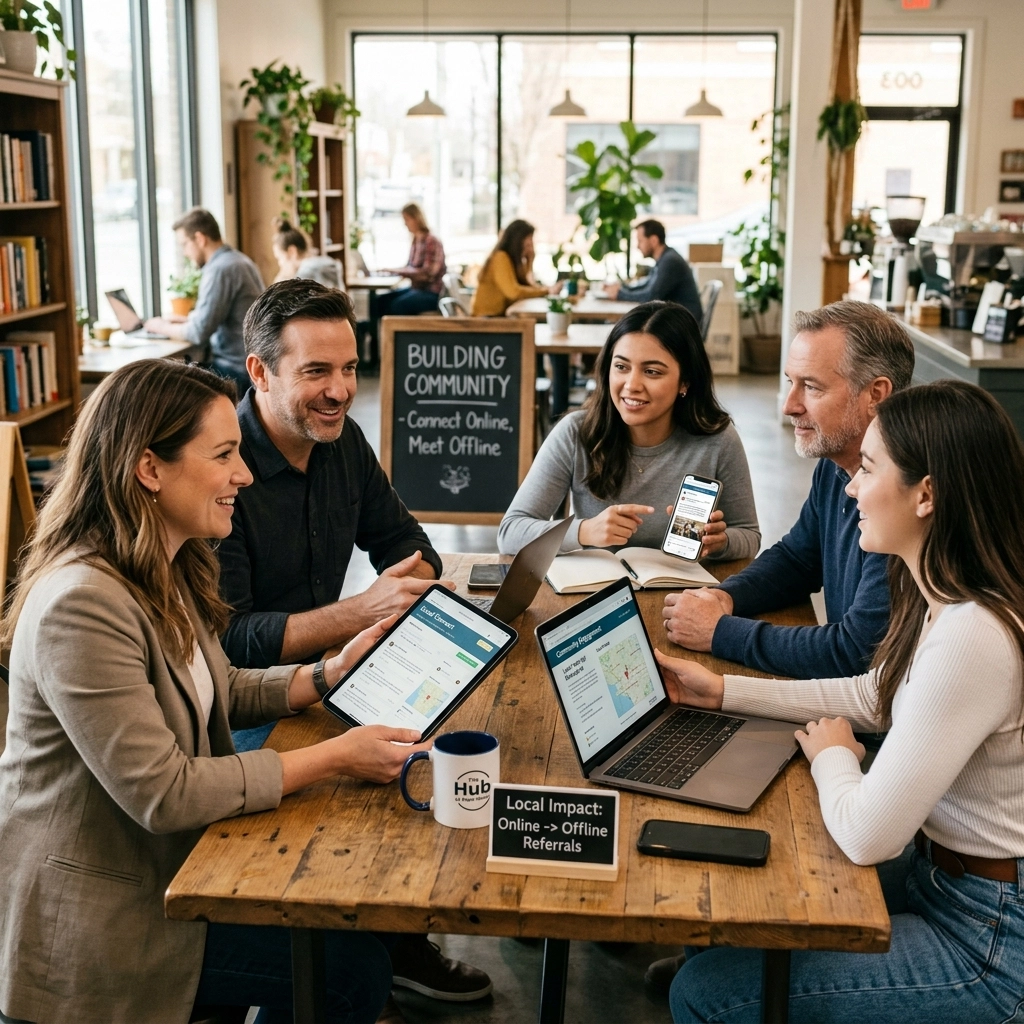
In the real estate world, your digital presence shouldn’t just be a gallery; it should be a community center. If your online activity stays “on the grid,” you’re missing the real magic that happens in the streets of your neighborhood. The goal isn’t just to get likes from strangers three states away. It’s to drive physical handshakes, coffee meetings, and “you’re the person I keep seeing online” comments at the grocery store.
Here’s how you can stop just posting and start actually engaging with your local community online to drive the offline referrals that build your business.
Stop Being a Realtor, Start Being the “Digital Mayor”
The most successful realtors don’t lead with their license. They lead with their love for their community. When you shift your mindset from “selling houses” to “serving the neighborhood,” your online engagement takes on a whole new life.
Think of yourself as the “Digital Mayor” of your specific zip code. A Digital Mayor knows where the best morning latte is, which park has the newest playground equipment, and which local non-profit is looking for volunteers. By providing this information, you aren’t just a salesperson, you’re an indispensable resource.
- Highlight local business owners. Don’t just tag the coffee shop; interview the owner on your Stories.
- Share local events. Post about the high school football game or the upcoming library book sale.
- Answer community questions. If someone in a local group asks about a plumber, be the first one to offer a trusted recommendation.
When you become the hub of local information, you’re the first person people think of when they need help with something as big as buying or selling a home.

Mastering the “Big Three” of Local Digital Spaces
To drive offline referrals, you need to be active where your neighbors are already talking. There’re three main places where local conversations happen, and each requires a slightly different approach.
1. Facebook Groups (The Modern Town Square)
Most towns have a “What’s Happening in [Your City]” or a “Local Moms” group. These are gold mines for referrals. However, the quickest way to get kicked out is to spam your latest listing. Instead, focus on being helpful.
- Conduct regular “advice” sessions. Post once a month asking if anyone has questions about property taxes or local market trends.
- Search for keywords. Use the search bar within the group to look for words like “moving,” “relocating,” or “neighborhood advice.”
- Stay human. Comment as yourself, not as your business page, to build a more authentic connection.
2. Nextdoor (The Hyper-Local Pulse)
Nextdoor can be a bit of a wild west, but it’s where people go when they have a problem or a specific local need. It’s the ultimate platform for building “street cred.”
- Register as a local business. Ensure your profile is professional but approachable.
- Offer genuine help. If someone lost a dog or needs a recommendation for a gardener, help them out without asking for anything in return.
- Use the “Real Estate” section wisely. Share insights about local market data rather than just pushing a “just sold” post.
3. Instagram Location Tags and Hashtags
While your grid is your portfolio, your engagement with local tags is your outreach. Spend 15 minutes a day looking at photos tagged at local parks, restaurants, and schools. Like them. Comment on them. It’s a low-pressure way to get your name in front of local eyes.
From Comment to Coffee: The Bridge Strategy
The biggest mistake realtors make is letting a digital interaction die in the comments section. To drive offline referrals, you need a “bridge strategy”, a way to move a digital acquaintance into a real-life relationship.
If you’ve been chatting with someone in a local Facebook group about the best hiking trails, don’t just stop there. Send a direct message (DM) and say, “Hey, I actually have a map of the hidden trails in the north end. I’d love to drop a copy off to you or meet for a quick coffee to share some tips!”
The “coffee invite” is the ultimate tool in your kit. It’s low-pressure, high-value, and it’s where the actual referral happens. You don’t have to talk about real estate the whole time. In fact, it’s better if you don’t. Build the relationship first; the business will follow.

Using Digital Tools to Enhance Offline Events
Events are the heavy lifters of offline referrals. Whether it’s a client appreciation party or a neighborhood garage sale, your online presence should act as the megaphone for these physical gatherings.
- Create Facebook Events. This allows people to invite their friends, which is a built-in referral system.
- Use QR codes on physical signage. When you host an open house, have a QR code that links directly to a “Local Guide” on your website. This bridges the physical visit back to your digital ecosystem. Check out our resources page for ideas on how to structure these guides.
- Go Live at the event. Show the “behind the scenes” of your local involvement. It humanizes you and makes people who couldn’t make it feel like they missed out, encouraging them to show up next time.
If you’re feeling overwhelmed by the technical side of this, you might want to look into outsourced marketing department services to handle the heavy lifting while you focus on the handshakes.
The Power of the “Review Loop”
Referrals are essentially just “social proof.” You can supercharge this by creating a loop between your offline success and your online reputation.
When you close a deal, don’t just say goodbye. Ask for a review specifically mentioning the neighborhood. For example: “I loved helping you find this house in the Eastside district! Would you mind leaving a review mentioning how we navigated the local school zones?”
When potential clients search for a realtor in a specific area, these “geofenced” reviews (reviews that mention specific local landmarks or neighborhoods) carry significantly more weight than a generic “Great service!” post.

Strategic Content: What to Post to Get People Talking
If you’re staring at your phone wondering what to post that isn’t a listing, here’re a few ideas that drive local engagement:
- “This or That” Neighborhood Edition: Ask followers to choose between two local landmarks or parks.
- Local Business Spotlight: A weekly series where you visit a local shop and interview the owner.
- Market Snapshot Videos: 60-second clips explaining what’s happening specifically in your town, not the country at large.
- Infrastructure Updates: Is a new road being built? A new school opening? Be the one to report on it first.
These posts encourage comments, shares, and tags, all of which increase your visibility within the local digital ecosystem. If you need help refining your message, our consulting services can help you find your unique local voice.
Tracking Your “Digital to Doorstep” Journey
You can’t improve what you don’t measure. While “likes” are great for the ego, you need to track how many digital interactions are actually leading to offline meetings.
Keep a simple spreadsheet or use your CRM to track the “Lead Source.” If someone sends you a referral, ask them, “How did you hear about me?” If they say, “I saw your video about the new park on Facebook,” that’s a win for your digital engagement strategy.

Making it Sustainable
The key to community engagement is consistency. You don’t have to be online 24/7. In fact, that would take you away from the actual “real world” work you need to do.
- Set an “Engagement Hour.” Dedicate 30 minutes in the morning and 30 minutes in the evening to responding to local comments and DMs.
- Batch your local content. Spend one afternoon a month visiting local businesses to gather photos and videos for the entire month.
- Delegate when necessary. If you’re at the point where you have more referrals than you can handle, it might be time for a one-time business development audit to see where you can optimize your time.
Summary: Building a Business That Lives Everywhere
At the end of the day, real estate is a relationship business. Your digital tools are simply a way to scale those relationships. By engaging with your local community online with a focus on offline results, you aren’t just building a “following”, you’re building a network of neighbors who know, like, and trust you.
Don’t let your grid be the end of your marketing journey. Let it be the start of a conversation that ends in a handshake, a referral, and a lifelong client.
Ready to take your local engagement to the next level? At BDEC Marketing Group, we specialize in helping professionals bridge the gap between digital strategy and real-world results. Whether you need a full outsourced marketing department or a quick consultation, we’re here to help you grow.
Go beyond the grid. Your community is waiting for you.